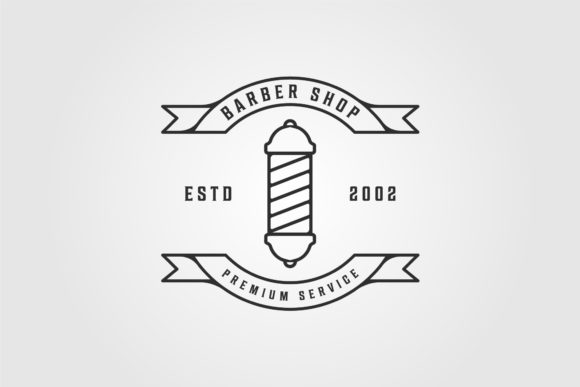
Barber Shop Logo Minimalist Line Art Review
When I first opened the Barber Shop Logo Minimalist Line Art file, my initial reaction wasn't about the technical specs but rather the mood it immediately established. There is a distinct confidence in this design that cuts through the noise of overly complex traditional barber shop imagery. In a market saturated with heavy fill stitches and intricate beards, this minimalist approach feels fresh, modern, and surprisingly versatile. As someone who has reviewed countless embroidery files for both personal projects and commercial client work, I can say that simplicity is often harder to execute well than complexity, and this design manages to strike that balance effectively.
The visual personality here is clean and professional. The line art style suggests a focus on precision and craft, which aligns perfectly with the services typically offered in a barbershop or grooming studio. It doesn't scream "loud" but rather whispers "quality." For an embroidery designer looking to create a cohesive brand identity, this Barber Shop Logo Minimalist Line Art offers a sophisticated entry point. It avoids the cluttered look that often plagues small business merchandise, making it an excellent candidate for high-end boutique branding or personalized gifts where subtlety is key.
From Digital Vector to Stitched Reality
Moving from the screen to the hoop requires a shift in perspective, and this is where the practical value of this design truly shines. The product description notes that you can change vector-based designs as you wish, provided you open the EPS file using Adobe Illustrator. This is a crucial detail for any embroidery designer planning to use this asset. While the text itself is non-editable, the ability to manipulate the lines allows for significant customization before converting the file into a stitch-ready format.
I recently tested this concept by preparing a custom embroidered tote bag for a local pop-up shop event. The goal was to create a piece of custom apparel that felt artisanal yet commercially viable. When I imported the vector into my digitizing software, the clean lines translated beautifully. The lack of dense fill areas meant I could optimize the stitch density to prevent puckering, a common issue when working with thinner fabrics like canvas or cotton twill often used for tote bags. The result was a sharp, crisp logo that looked just as good on the finished product as it did in the digital mockup.
This versatility extends beyond tote bags. Imagine applying this same design to a sweatshirt embroidery project for a holiday gift or a baby item for a new parent. The minimalist nature ensures that the design won't overwhelm the fabric or the wearer. On a baby onesie, for instance, the fine lines would stand out without feeling heavy or restrictive against soft skin. Similarly, for an embroidered patch intended for a denim jacket or a cap, the linear aesthetic provides enough definition to hold its shape even on curved surfaces, provided the hoop size is managed correctly.
Navigating Fabric and Texture Challenges
However, not every application is a guaranteed success, and as a reviewer, I feel compelled to highlight where caution is necessary. The Barber Shop Logo Minimalist Line Art relies heavily on the clarity of its strokes. This means that while it performs exceptionally well on smooth, stable fabrics, it may struggle on highly textured materials like thick fleece or bouclé. On such surfaces, the fine lines might get lost in the weave, reducing the visual impact of the design.
Furthermore, if you are working with stretchy fabrics, such as those found in performance wear or certain types of knit caps, you must be vigilant about your stabilizer choices. Without adequate support, the tension required for satin stitches or running stitches could distort the delicate lines, causing them to wobble or break. Dark fabrics present another consideration; while black thread on a dark shirt might offer a subtle tonal look, it risks low visibility unless a contrasting outline is added. Conversely, on light backgrounds, the design pops with high contrast, making it ideal for kitchen towels or pillow covers where crispness is desired.
One specific area to avoid is small hoop sizes. If you attempt to downscale this design too much for a tiny accessory, the fine details may become indistinguishable after stitching. The human eye needs a certain amount of space to appreciate the elegance of the line work. Therefore, I recommend reserving this design for medium to large applications, such as chest logos on shirts, back prints on jackets, or larger decorative items like aprons. Tiny lettering or intricate corners should be inspected closely before final production to ensure they remain legible.
Maximizing Value for Commercial and Personal Use
For Etsy sellers and small shop owners, the appeal of this design lies in its ability to elevate the perceived value of a handmade product. A well-executed embroidery job signals quality and attention to detail, which directly influences customer trust. When a buyer sees a clean, professionally stitched Barber Shop Logo Minimalist Line Art on a leather wallet or a canvas messenger bag, they perceive the item as premium rather than mass-produced.
This holds true for holiday embroidery projects as well. Whether creating personalized gifts for clients or stocking up on inventory for a craft fair, this design offers a timeless aesthetic that transcends fleeting trends. It fits seamlessly into a collection of design assets that a creative entrepreneur might use to build a cohesive brand. The fact that it is categorized under Logos and Graphics highlights its dual utility: it serves as a standalone artistic piece while also functioning effectively as a corporate identity marker.
When evaluating the finished product, consider how the thread colors interact with the design. Since the source file includes JPG and PDF previews, you can simulate different colorways to see how they perform. A monochromatic scheme often works best to maintain the minimalist integrity, but introducing a single accent color can add depth without compromising the clean look. Always test your chosen thread colors against the actual fabric swatch, as lighting conditions in the store may differ significantly from your home workspace.
Essential Notes for the Embroidery Designer
Before committing to a full production run, there are several practical steps every designer should take. First, always test the design on scrap fabric that matches the weight and texture of your final material. This simple step can save hours of frustration and wasted supplies. Check the stitch density carefully; if the design feels too crowded, consider adjusting the spacing between lines or switching from a satin stitch to a running stitch for certain elements to reduce bulk.
Confirm your hoop size and ensure the design fits within the boundaries without requiring excessive trimming. If you plan to sell finished items commercially, review the licensing terms thoroughly. While the product description states that vector-based designs can be changed, the non-editable text restriction means you cannot alter the typography within the logo itself. This is important for maintaining brand consistency if you are using this for a client's business.
Finally, inspect the small details and decorative accents under magnification. Ensure there are no loose threads or gaps in the stitching that could detract from the overall presentation. By taking these precautions, you ensure that the Barber Shop Logo Minimalist Line Art delivers the professional results your customers expect. Whether you are crafting a unique personalized gift or building a robust line of craft business products, this design offers a solid foundation for success.
In conclusion, this file represents a smart choice for designers who value clarity and modern aesthetics. It bridges the gap between digital graphic design and tangible textile art with ease. With proper preparation and an understanding of fabric limitations, it can transform a simple garment or accessory into a statement piece that resonates with buyers and stands the test of time.